
Synthetic Oil Change Interval: When to Switch, When to Wait
Your sticker says one thing, your dashboard says another, and your owner’s manual lists two schedules. Here’s how to sort out the synthetic oil change interval that actually fits your vehicle.

Your windshield reminder sticker says one thing. Your dashboard says something else. Your owner’s manual may list separate schedules for normal and severe driving. That leaves many drivers wondering whether they are changing their engine oil too soon, waiting too long, or following the wrong recommendation altogether.
Instead of worrying you’re on the brink of engine failure if you’re not following the owner’s manual to the T, just know that the correct synthetic oil change interval depends on more than the motor oil itself.
Vehicle design, manufacturer requirements, driving conditions, mileage, time, and maintenance history can all affect the right schedule.
Our guide will help explain how to sort through those factors, which recommendation should carry the most weight, when a shorter interval may apply, and when a warning sign points to a mechanical issue rather than an overdue engine oil change.
What Actually Determines Your Synthetic Oil Change Interval
Your vehicle manufacturer sets the approved synthetic oil change interval based on the engine design, required motor oil specification, mileage, time, and expected operating conditions. Synthetic oil may support a longer service interval than conventional oil when the manufacturer permits it, but it does not create a separate schedule or justify exceeding the stated limit.
Your interval should be based on four primary factors:
- The mileage and time limits in your owner’s manual
- Whether your driving matches the manufacturer’s severe-driving or service definition, including actions like towing
- The vehicle’s oil monitoring system, or oil-life monitor, when equipped
- The required oil viscosity and performance specification
A thorough understanding of these factors, possibly informed by your dealer or a trusted mechanic, can ensure you’re adhering to the optimal schedule for preventing engine wear and maintaining your automobile’s health.
Always be mindful of additional signs like the check engine light related to low oil level or other issues, and don’t forget to keep an eye on the dipstick for any signs of sludge or unusual oil changes, no matter the vehicle make and model.
How Many Miles or Months Can Synthetic Oil Last?
There is no single mileage or time interval that applies to every vehicle using synthetic oil.
Manufacturer-approved schedules vary by engine design, oil specification, driving conditions, vehicle age, and whether the vehicle uses an oil monitoring system.
Drivers commonly encounter several different recommendations, which is one reason the topic can feel confusing.
| What you may see | What it means |
|---|---|
| 3,000 miles | A traditional rule of thumb for older vehicles and engine oil types may be more frequent than many modern manufacturers require |
| 5,000–7,500 miles | A common range found in some modern maintenance schedules, depending on the vehicle and driving conditions |
| Longer manufacturer-approved intervals | Possible for certain vehicles using the required synthetic oil and operating under qualifying conditions |
| A time limit, such as 6 or 12 months | Applies when the vehicle reaches the calendar limit before the mileage limit |
| An oil-life percentage | A vehicle-generated estimate that should be interpreted alongside the owner’s manual |
Source note: The mileage examples are illustrative and provided for general context. They reflect historical and current oil-change interval patterns described in published automotive guidance. Always follow the mileage, time, oil specification, and operating-condition requirements for your specific vehicle.
A Simple Way to Set Your Interval
Always start with the mileage and time limits in your owner’s manual, as AAA likewise recommends. Then determine whether your normal driving matches the manufacturer’s severe-service conditions and confirm the required oil viscosity and performance specification.
Record the date and mileage at every service appointment, along with the oil and filter used.
If your vehicle has an oil-quality monitoring system, make sure it is reset after the oil change.
Schedule the next service based on whichever approved limit comes first—mileage or time—so you know when to change synthetic oil without servicing too early or waiting too long.
The Oil-Life Monitor or the Windshield Sticker: Which Should You Follow
It’s clear that a major issue with oil changes now is the wide range of interval recommendations, with most discrepancies coming from two major sources that are hard to ignore: your reminder sticker on the windshield and new oil-life monitors.
Oil-Life Monitors
Many newer vehicles with internal combustion engines (ICE) or hybrid engines come with oil-quality monitoring systems, intelligent oil-life monitors, or just smart oil level sensors.
These can be useful because they estimate oil life based on vehicle operation rather than relying only on a fixed mileage number.
Depending on the vehicle, the system may consider engine temperature, trip length, engine speed, idle time, mileage, load, and other operating factors. All you have to do is wait for the oil light to turn on.
Service Center Reminders on Windshields
If you take your car to a service center regularly, you’ll likely also have a windshield reminder sticker of your next oil change or service left there by your service provider or mechanic. It may reflect a standard interval rather than the exact maintenance logic built into your vehicle.
Confusion Solution: When the sticker, dashboard, and owner’s manual do not agree, start with the manufacturer’s guidance.
Also, confirm that the oil-life monitor was reset after the previous service. If it was not reset, the reading may not accurately reflect the oil currently in the engine.
While the monitor is part of the maintenance system, it does not replace checking the oil level or responding to warning lights. An oil-life percentage does not indicate how much oil remains in the engine.
How Driving Conditions Affect Your Oil-Change Interval
Two drivers can cover the same mileage and still fall under different maintenance schedules. Frequent short trips, prolonged idling, extreme temperatures, towing, dusty conditions, and heavy loads can place more demand on the engine oil.
Regular, sustained driving that allows the engine to reach full operating temperature may fit the normal-service schedule. Even under favorable conditions, however, synthetic oil should not be used beyond the manufacturer’s stated mileage or time limit.
Conditions That May Qualify as Severe Service
To set a suitable oil change schedule, consider driving habits and conditions. Vehicles operating under severe-service conditions may require more frequent oil changes.
However, severe driving conditions or service does not simply mean aggressive driving.
Depending on the manufacturer, it may include:
- Frequent short trips, especially in cold weather
- Repeated stop-and-go driving
- Prolonged idling
- Towing or hauling
- Regular heavy loads
- Extreme temperatures
- Dusty environments and operating conditions
- Commercial, delivery, or fleet operation
The exact definition varies by automobile, so reviewing the severe-service section in your owner’s manual is crucial rather than assuming every city trip automatically requires a shorter interval.
When a More Conservative Maintenance Approach May Be Appropriate
Some conditions make it challenging to determine the correct maintenance schedule for a vehicle. A more conservative approach may be warranted when:
- You’re driving a vehicle with a history of engine oil leaks or abnormal oil consumption, necessitating inspection and frequent oil-level monitoring via the dipstick.
- You’ve recently purchased a used vehicle with incomplete maintenance records.
- Your warranty, lease, or fleet agreement specifies a particular mileage interval.
- The previous engine oil type, viscosity, or specification is unknown, raising concerns about potential engine wear.
Such conditions do not automatically place the vehicle under the severe-service schedule.
They may justify reviewing your maintenance actions and establishing a documented baseline with guidance from a qualified mechanic or service center.
Regular checks of the dipstick and oil light indicators, along with consultations with technicians, ensure you maintain engine health and avoid issues like sludge buildup or engine overheating.
Scheduling regular mobile service appointments with MAXI can prevent unforeseen failures, thus extending the longevity of your engine.
With the added benefit of having one less thing to worry about, and without leaving your home.
Why Synthetic Oil May Support Longer Approved Intervals
Synthetic oil is formulated to perform consistently across a wide range of operating conditions.
Depending on the specific formulation and engine, it may resist oxidation and high-temperature breakdown better than conventional oil, flow effectively during cold starts, and provide strong deposit control.
Those characteristics can help synthetic oil remain effective throughout a longer manufacturer-approved interval compared to conventional oil.
However, the oil still collects contaminants, its additives become depleted, the oil level can fall, and the filter still requires replacement. Synthetic oil supports the approved schedule; it does not eliminate maintenance.
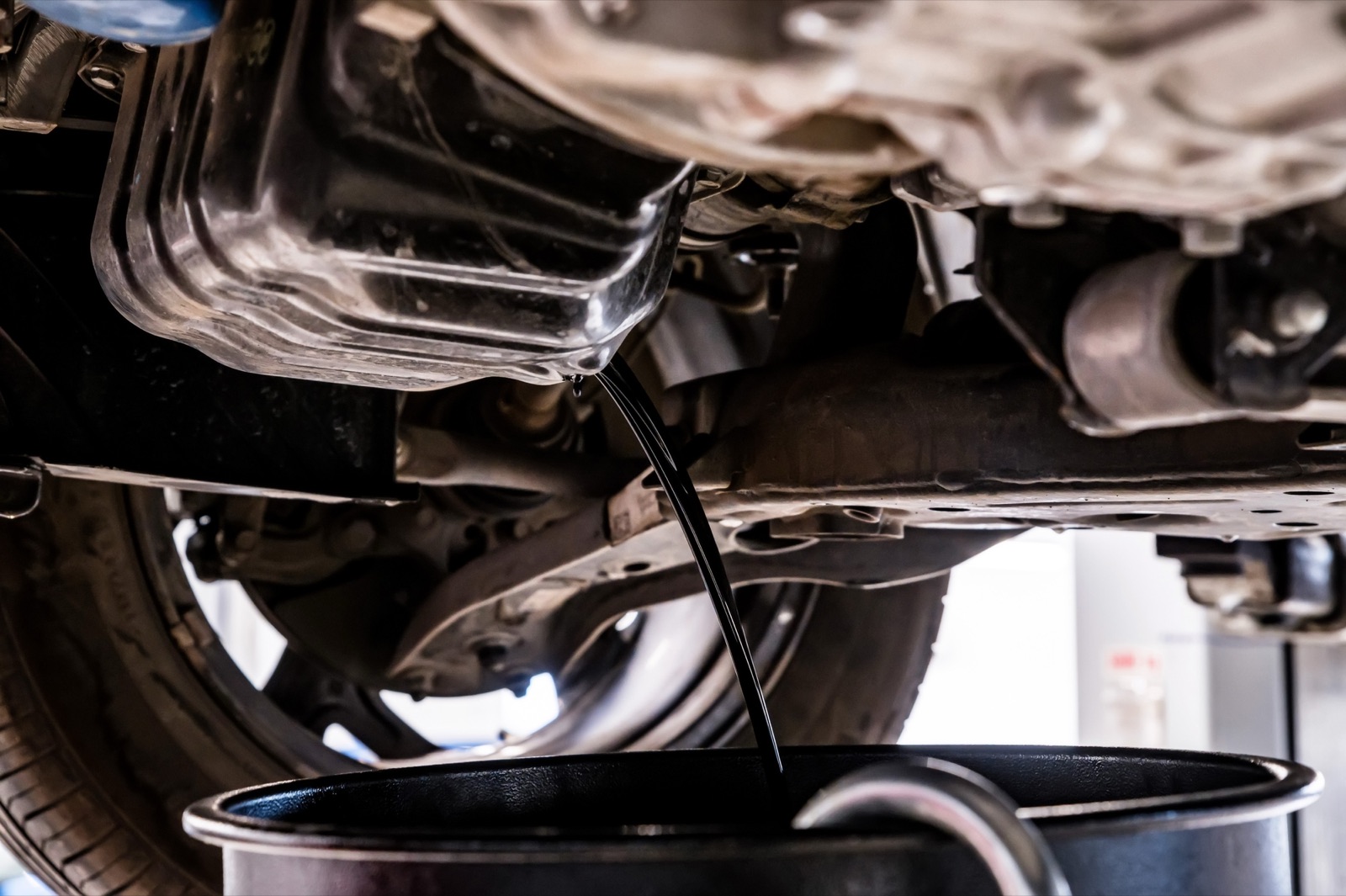
Switching From Conventional to Synthetic Oil
In many modern vehicles, switching from conventional motor oil to synthetic can be done during a routine oil change without a separate flushing procedure. Just follow the vehicle manufacturer’s guidance.
The replacement oil must still meet the manufacturer’s required viscosity and performance specification.
Choosing synthetic oil does not override those requirements.
Older or high-mileage vehicles may need additional attention when they have existing leaks, abnormal oil consumption, sludge concerns, or an uncertain maintenance history. In those situations, it is sensible to have the vehicle’s condition reviewed before changing the service strategy.
If the manufacturer already requires synthetic oil, there is nothing to switch. Use the specified oil, follow the approved interval, and keep a service record showing the date, mileage, oil specification, and filter used.
Synthetic oil may be especially useful for turbocharged engines, vehicles operated under demanding conditions, and any vehicle for which the manufacturer specifically requires it.
How to Tell Whether Your Service Schedule Needs Attention
Oil color, engine sound, and general engine feel are not reliable ways to determine an oil-change interval. Oil can darken while still performing normally, while unusual noise or rough operation may indicate low oil, a leak in the oil passages, mechanical wear, or another issue that requires inspection.
Use the owner’s manual, oil-life monitor, maintenance records, and measurable vehicle conditions instead.
Signs That Your Current Schedule Should Be Reviewed
A schedule is worth reviewing when the guidance you follow no longer matches your vehicle, driving conditions, or maintenance records.
Common signs include:
- You still follow a universal 3,000-mile rule even though your owner’s manual permits a different interval.
- Your oil-life monitor and windshield reminder sticker regularly show different recommendations.
- Your driving qualifies as severe service, but you follow the normal-service schedule.
- You frequently pass the mileage or time limit listed in the owner’s manual.
- You do not know which oil viscosity or specification was used during the previous service.
- Your maintenance records are incomplete or inconsistent.
Conditions That Require Inspection
Some oil-related warning signs point to a leak, low oil level, abnormal consumption, or a mechanical problem rather than an overdue oil change. Arrange an inspection if:
- The oil-pressure warning light comes on.
- The engine develops unusual noise or rough operation.
- The oil level drops significantly between services.
- You notice an oil leak.
- You smell burning oil.
- You see unusual exhaust smoke.
If the oil-pressure warning light comes on, stop driving as soon as it is safe to do so and follow the vehicle manufacturer’s guidance. Continuing to drive with low oil pressure can damage the engine.
Shortening the oil-change interval will not correct an underlying leak, abnormal oil consumption, low oil pressure, or mechanical problem. Check the oil level safely and have the vehicle evaluated when needed.
Why Maintenance Records Matter
A good maintenance record shows when the oil change was completed and what products were used. That documentation can support warranty discussions, resale records, fleet management, and future maintenance decisions, although it does not guarantee warranty coverage or a higher resale value.
A useful oil-change record should include:
- Vehicle identification
- Service date
- Mileage
- Oil viscosity
- Oil performance specification
- Filter information
- Service provider
- Relevant inspection notes
A VIN-linked digital receipt or documented vehicle history can make those records easier to retrieve later. Keep copies of invoices or digital service records when warranty, lease, fleet, or resale documentation matters.
Turn Oil Changes Into a Simpler Maintenance Routine
An oil-change appointment can also be a convenient time to review tire pressure, wiper blades, the engine air filter, accessible fluid levels, and upcoming maintenance listed in the owner’s manual.
That’s where MAXI’s mobile oil change services can come in and take one less thing to worry about from your busy schedule.
A MAXI mobile oil change is simple:
- Book an appointment online
- Share your vehicle info
- Choose a time and location
- A trained technician shows up with the tools, oil, filters, and equipment needed to service your vehicle on-site.
No line. No waiting room. No having to take time off from work.
Just One Less Thing.
Of course, that does not mean every maintenance item should automatically be completed at every oil change.
MAXI also offers mobile tire services and other maintenance essentials, which should still follow their own manufacturer-approved schedules.
For households or fleets with multiple vehicles, coordinating service windows can reduce disruption while keeping each vehicle on its own approved schedule.
Make Staying on Your Oil-Change Schedule Easier with MAXI Mobile
The right synthetic oil change interval is the one approved for your vehicle and matched to how you drive. Follow the mileage and time limits in your owner’s manual, use the required oil specification, and keep a clear record of each service.
Once you know the correct interval, MAXI Mobile can help you follow it without making a trip to a shop.
We bring a full-synthetic oil change to your driveway, workplace, job site, or fleet lot. When the location is accessible and suitable for service, the work can be completed where the vehicle is already parked.
One less thing off your list.
Afterward, MAXI emails a digital service receipt and reports the completed service to CARFAX, helping you maintain a clear vehicle history.